
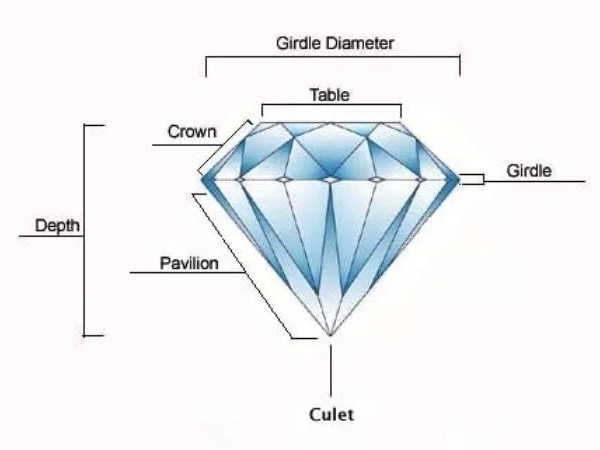
The Parts of a Faceted Gemstone Explained
If you’ve ever looked closely at a faceted gemstone, you may have noticed that it is made up of several
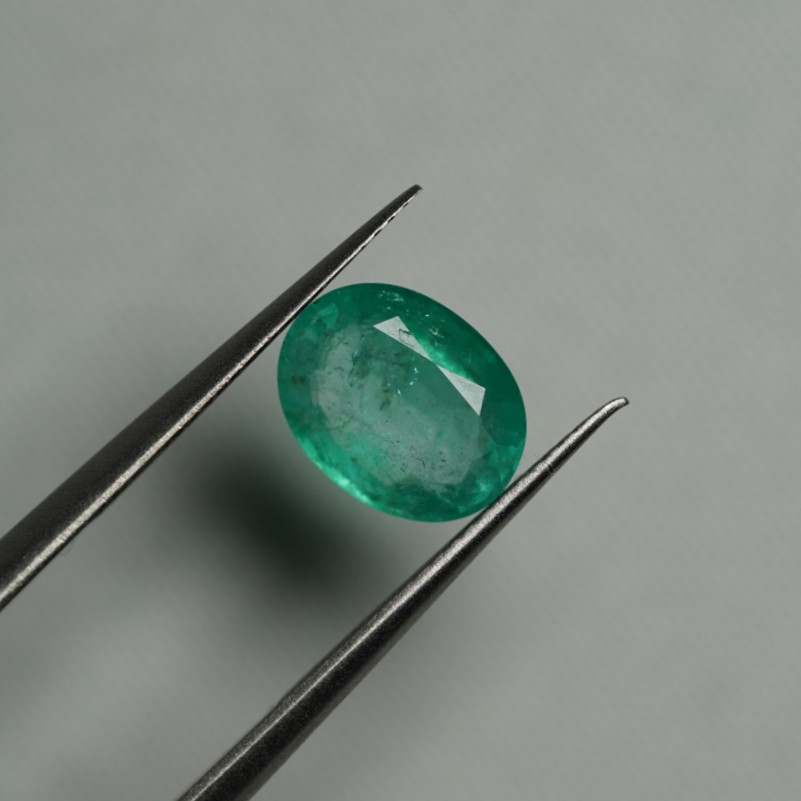
Emeralds are among the world’s most admired and valuable coloured gemstones. Their distinctive green colour has been treasured for thousands of years, from the ancient emerald mines of Egypt to the famous deposits of Colombia and the major producing regions of Zambia, Brazil and beyond.
But what makes one emerald worth considerably more than another?
Two emeralds can have the same carat weight and similar dimensions, yet differ dramatically in value. This is because emerald value is determined by a combination of factors including colour, clarity, transparency, origin, treatments, cut, carat weight and overall beauty.
Unlike diamonds, where clarity plays a particularly important role, emeralds are naturally expected to contain inclusions. Understanding these characteristics is essential when buying, selling or collecting emeralds.
Emerald is the green to bluish green variety of the mineral beryl, the same mineral family that includes aquamarine. Its green colour is primarily caused by trace amounts of elements such as chromium and vanadium, with iron also influencing colour in some emeralds.
Emeralds are relatively hard, measuring around 7.5–8 on the Mohs scale, but their natural fractures and inclusions can make them more vulnerable to damage than some other gemstones.
The most desirable emeralds display a strong, attractive green colour combined with good transparency and a pleasing appearance.
When assessing an emerald, colour is generally the most important consideration.
The finest emeralds typically display a bluish green to pure green colour, with strong saturation and a medium to medium dark tone. Extremely dark emeralds can lose brightness, while stones that are too pale may be classified as green beryl rather than emerald.
Emerald colour can be considered in three main areas:
Hue describes the basic colour of the stone.
Emeralds can range from:
A slightly bluish green colour is often highly desirable, particularly when combined with strong saturation.
Tone describes how light or dark the emerald appears.
An emerald that is too light may lack the intensity expected from a fine emerald, while one that is extremely dark may appear almost black and lose some of its visual life.
The most desirable stones generally have a balanced tone that allows the green colour to remain vivid without becoming overly dark.
Saturation describes the strength or intensity of the colour.
A highly saturated emerald can display a rich, powerful green that immediately catches the eye. Increasing saturation is generally associated with increasing value, provided the tone and overall appearance remain attractive.
The precise colour of an emerald is influenced by its chemistry and geological formation. Chromium, vanadium and iron can all contribute to the final colour, and their relative concentrations can vary between deposits and individual crystals.
This is one reason why emeralds from different parts of the world can have distinctive appearances.
Colombia has become particularly famous for producing exceptional emeralds and has a long history of emerald mining.
Colombian emeralds are often associated with a rich, warmer and highly saturated green, although this is not true of every stone from the country. Famous Colombian mining regions include Muzo and Chivor.
Historically, Colombian emeralds gained an exceptional reputation when they entered international markets following the arrival of Spanish conquistadors in South America. GIA notes that Colombian material became renowned for its quality and size.
High quality Colombian emeralds can command significant premiums, particularly when they combine excellent colour, transparency, clarity and desirable provenance.
However, “Colombian” does not automatically mean “high quality.”
Every emerald producing region produces a range of qualities, and an exceptional emerald from another origin can be considerably more valuable than a lower quality Colombian emerald.
Zambia is one of the world’s most important modern sources of emeralds.
Zambian emeralds are often associated with cooler, slightly bluish green colours, although there is considerable variation between individual stones. GIA specifically notes that Colombian and Zambian emerald appearances overlap, meaning origin should not be used as a substitute for judging the actual gemstone.
Zambian emeralds can offer excellent colour and size, and exceptional examples can be highly valuable.
The quality of the individual stone remains more important than simply knowing its country of origin.
Brazil produces emeralds with a wide range of colours and qualities.
Brazilian emeralds can display attractive green to bluish green colours, and some deposits are known for distinctive appearances and inclusions.
Brazil is also an important source of other beryl varieties, making the country’s gemstone deposits particularly interesting to collectors.
As with Colombia and Zambia, origin is only one part of the value equation. A beautiful, highly transparent Brazilian emerald with excellent colour can be more desirable than a poorer quality emerald from a traditionally more prestigious origin.
Emeralds have been found in numerous locations around the world, including:
The historical emerald mines of Egypt are particularly significant. GIA states that the first known emerald mines were in Egypt and may have been worked as early as around 3500 BC.
Newer deposits have also contributed interesting material to the international emerald market. GIA’s research identifies important production from Africa, South America and Central Asia, with deposits also occurring in countries such as Ethiopia and Madagascar.
Emeralds are very different from diamonds when it comes to clarity.
In a diamond, a stone with numerous visible inclusions may be considered significantly less desirable. With emeralds, inclusions are extremely common and generally accepted as part of the gemstone’s natural character.
These internal characteristics are often referred to as “jardin”, the French word for garden, because some emerald inclusions resemble foliage, moss or a miniature garden.
Under magnification, emeralds can reveal fascinating combinations of:
These characteristics can help gemologists understand how an emerald formed and, in some cases, can provide clues about its origin.
Generally, yes but emeralds need to be judged differently from diamonds.
An emerald with fewer visible inclusions and good transparency can be considerably more valuable because eye clean natural emeralds are exceptionally rare.
However, some inclusions may be attractive and contribute to the character of a stone.
The important distinction is whether the inclusions:
An emerald with a beautiful natural jardin that still has excellent colour and transparency can be highly desirable.
Transparency refers to how easily light can pass through the gemstone.
This is particularly important in emeralds because transparency and clarity are closely connected. An emerald with excellent colour but very poor transparency may appear dull or lifeless.
A highly transparent emerald allows the viewer to appreciate its colour and internal depth.
For example:
Emerald A
This could be a highly desirable stone.
Emerald B
Despite having a similar colour and size, Emerald B could be worth substantially less.
This demonstrates why emerald value cannot be determined by colour or carat weight alone.
One of the most important things to understand about emerald valuation is that these characteristics work together.
An emerald with exceptional colour but extremely poor transparency may not be as valuable as a stone with slightly less intense colour but significantly better transparency.
Likewise, an emerald with excellent transparency but weak, pale colour may not command the highest prices.
The most desirable combination is generally:
Strong attractive green + good saturation + balanced tone + good transparency + acceptable clarity
This combination becomes increasingly rare as gemstone quality increases.
Many natural emeralds contain fractures that reach the surface. Because these fractures can affect the stone’s appearance, emeralds are commonly treated to improve apparent clarity.
One of the traditional treatments is fracture filling, using substances such as oils. Other materials, including resins or polymers, may also be used.
Treatment is an important part of emerald valuation.
Two emeralds may look similar when viewed normally, but if one is untreated and the other has undergone significant clarity enhancement, the untreated stone may command a substantial premium particularly when it already has excellent colour and transparency.
Professional laboratory reports can identify detectable treatments and, in appropriate cases, provide information about the level of clarity enhancement. GIA reports may describe emerald clarity enhancement as minor, moderate or significant.
When purchasing a valuable emerald, understanding whether it has been treated is therefore extremely important.
A high quality natural emerald that has not required clarity enhancement is exceptionally rare.
If an emerald has:
it can command a substantial premium.
This is because the stone possesses desirable characteristics without relying on treatment to improve its apparent clarity.
However, treatment does not automatically make an emerald a poor quality gemstone. Most emeralds contain natural fractures and inclusions, and clarity enhancement is common within the trade.
The important point is that treatment should be disclosed and considered when assessing value.
Yes, but origin needs to be considered carefully.
Certain origins have developed strong reputations within the international gemstone market. Colombian emeralds, for example, have a particularly prestigious history and exceptional Colombian stones can command significant premiums.
However, origin alone does not determine value.
A useful way to think about it is:
Quality comes first. Origin can add a premium when the quality is already exceptional.
A high quality emerald from Zambia, Brazil or another source can be more valuable than a lower quality Colombian emerald.
For particularly valuable gemstones, an independent laboratory origin opinion can provide additional confidence and provenance. GIA notes that an origin determination can add provenance to an exceptional gemstone when the origin can be established.
Absolutely.
Like many gemstones, larger emeralds of comparable quality are generally much rarer than smaller stones.
As a result, the price per carat can increase substantially as size increases.
For example, a 1 carat emerald and a 5 carat emerald should not simply be valued by multiplying the 1 carat price by five. A large emerald with excellent colour, clarity and transparency may be considerably rarer and therefore command a much higher price per carat.
However, size does not compensate for poor quality.
A large emerald with unattractive colour and very poor transparency may still be worth considerably less than a smaller emerald with exceptional quality.
Emeralds are commonly fashioned into the emerald cut, a rectangular step cut design that takes its name from the gemstone itself.
The cut is particularly important because the cutter must balance:
Emeralds can contain significant fractures, making cutting more challenging than it might initially appear. The cutter must carefully plan the stone to minimise the effect of fractures while preserving as much valuable rough as possible.
A poorly cut emerald may appear dull or uneven in colour, while a well cut stone can maximise its natural colour and beauty.
The most desirable emeralds tend to combine several exceptional characteristics.
Colour: Vivid bluish green to pure green
Saturation: Strong and attractive
Tone: Balanced, not excessively dark
Transparency: Excellent
Clarity: Very few eye visible inclusions
Treatment: None or minimal
Origin: Desirable provenance where independently established
Cut: Well proportioned and attractive
Size: Larger stones can command significant premiums
Overall appearance: Bright, vibrant and visually impressive
It is the combination of these characteristics that can make exceptional emeralds extremely valuable.
When looking at an emerald, consider the following order:
Is the green attractive, vivid and well saturated?
Does light pass through the stone well, or does it appear cloudy or heavily obstructed?
How many inclusions are visible to the naked eye, and do they affect the stone’s beauty or durability?
Has the emerald been oil treated, resin filled or otherwise clarity enhanced?
Is the origin known, and is there reliable documentation supporting it?
Does the cut maximise the colour and appearance of the stone?
How large is the emerald, and how does its quality compare with other stones of similar size?
Ultimately, does the gemstone look exceptional?
Imagine two natural emeralds, both weighing 2 carats.
Emerald A
Emerald B
Although both stones weigh 2 carats, they could have dramatically different values.
This is why carat weight alone tells you very little about the true value of an emerald.
In fact, the difference between an ordinary emerald and an exceptional emerald can be enormous.
Emeralds are fascinating because their natural inclusions are part of their identity. Unlike diamonds, where the goal is often to find the cleanest possible stone, emeralds are expected to contain their own natural “garden”.
When assessing an emerald, start with the colour. Look for an attractive green with good saturation and a balanced tone. Then consider transparency and clarity, paying particular attention to whether inclusions interfere with the stone’s appearance or durability.
Next, investigate treatment and origin, particularly when purchasing a higher value gemstone. A laboratory report can provide valuable information about whether an emerald is natural, whether treatments have been detected and, where possible, its geographic origin.
Finally, consider the stone as a whole.
The most valuable emerald isn’t necessarily the largest or the one with the fewest inclusions. It is the gemstone that brings together beautiful colour, attractive transparency, desirable clarity, good cutting, size, provenance and natural beauty.
That combination is what makes a truly exceptional emerald so rare — and so sought after.
Subscribe to get the latest posts sent to your email.
If you’ve ever looked closely at a faceted gemstone, you may have noticed that it is made up of several
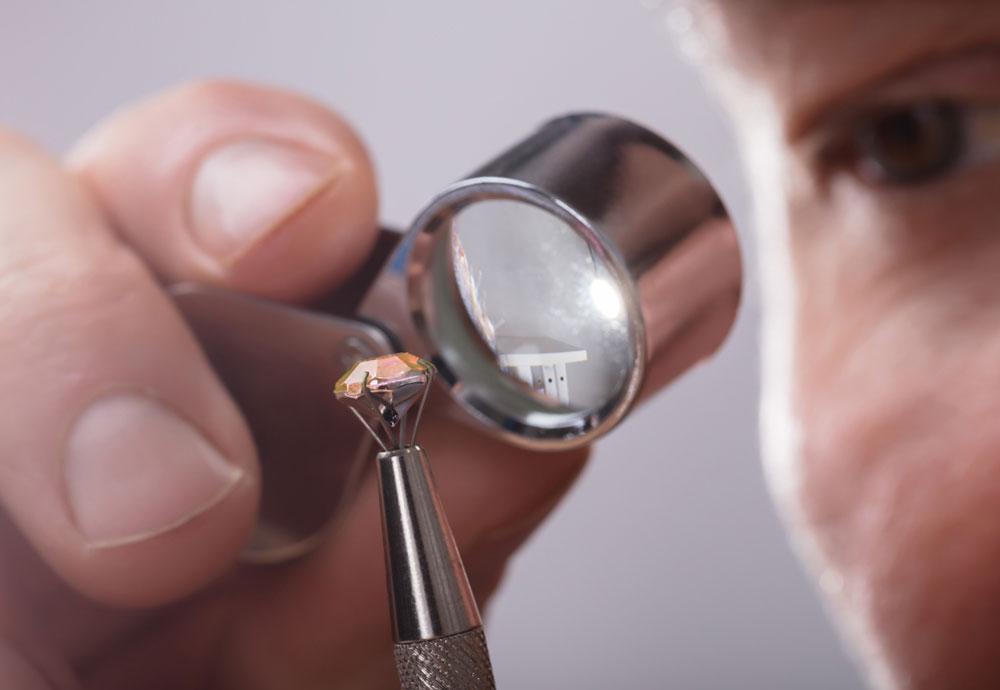
Gemstone Clarity Grades Explained | I, SI, VS, VVS, IF & FL When buying a natural gemstone, one of the