
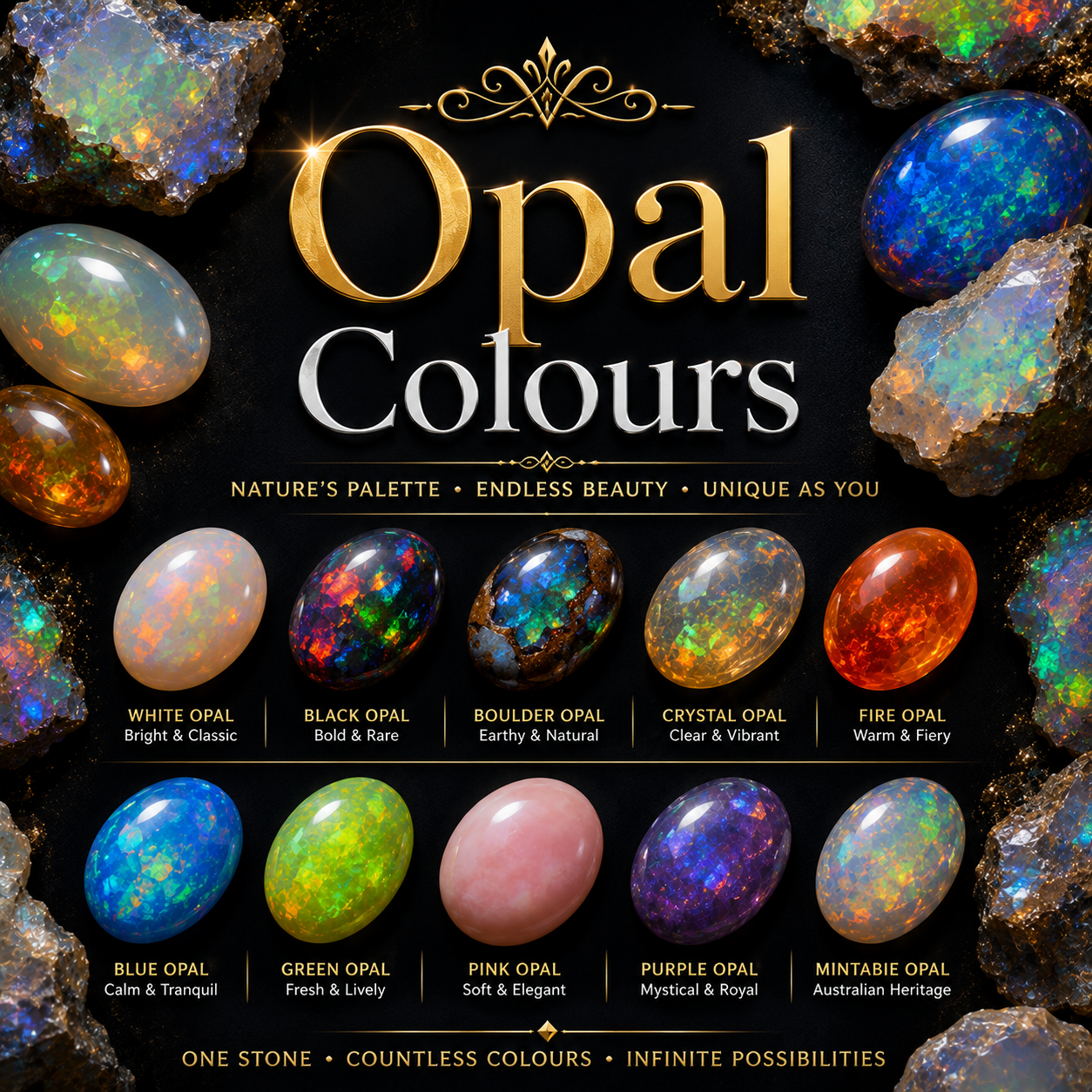
Opal Colours Explained: Which Opal Colours Are the Rarest?
Opal is one of the most fascinating natural gemstones, famous for its incredible play of colour. Unlike many gemstones that
When buying a natural gemstone, one of the most important things to understand is clarity.
Clarity describes the presence, size, position and visibility of inclusions and surface characteristics within a gemstone. Some gemstones can be almost completely free from visible inclusions, while others naturally contain internal features that are considered normal — and sometimes even desirable.
You may have seen gemstones described as I, SI, VS, VVS, IF or FL. But what do these grades actually mean?
In this guide, we’ll explain the different clarity grades, what to look for when examining a gemstone and how you can make your own approximate assessment at home.
Important: The FL, IF, VVS, VS, SI and I terminology is most formally standardised for diamonds. Coloured gemstones do not have one universal clarity grading system, so these terms may be used somewhat differently by different gemstone sellers. A professional laboratory or experienced gemmologist should be used when an independent certified grade is required.
Gemstone clarity refers to how free a gemstone is from inclusions and blemishes.
Inclusions are features located inside the gemstone. They can form naturally while the gemstone is growing or result from later processes.
Common inclusions include:
Some inclusions are extremely small and can only be seen using magnification.
Blemishes are characteristics found on the surface of a gemstone.
Examples include:
Clarity grading considers both the nature of these characteristics and how they affect the appearance of the stone.
For diamonds, GIA evaluates factors including the size, number, position, nature and colour or relief of clarity characteristics when assigning a grade.
The grades generally progress from the highest clarity to the lowest as follows:
FL → IF → VVS → VS → SI → I
The further down the scale you go, the more obvious the inclusions generally become.
However, it is important to remember that clarity is not simply a count of inclusions. A single large, dark inclusion in the centre of a gemstone can have a much greater visual effect than several tiny inclusions hidden near the edge.
FL stands for Flawless.
A flawless gemstone has no inclusions or blemishes visible to a skilled grader using 10× magnification under the appropriate grading conditions.
FL is the highest grade on the standard GIA diamond clarity scale and is exceptionally rare.
Under 10× magnification, a truly FL stone should show:
Do not automatically describe a coloured gemstone as FL simply because it looks clean to the naked eye.
Professional grading requires controlled conditions, appropriate magnification and experience.
IF stands for Internally Flawless.
An internally flawless stone has no visible inclusions under 10× magnification, although minor surface blemishes may be present.
This is an exceptionally high clarity level.
When examining a potential IF gemstone, look for:
IF gemstones are extremely uncommon among coloured gemstones, and whether the term is appropriate depends on the gemstone type and grading system being used.
VVS stands for Very, Very Slightly Included.
At this level, inclusions are present but are extremely difficult to very difficult for a skilled grader to see under 10× magnification.
VVS is generally divided into:
A VVS gemstone may contain:
The inclusions should have little or no noticeable effect on the gemstone’s appearance when viewed normally.
A high quality VVS gemstone will usually appear exceptionally clean to the naked eye.
However, don’t confuse eye clean with VVS. “Eye clean” is a practical trade description rather than a precise universal clarity grade.
VS stands for Very Slightly Included.
VS gemstones contain minor inclusions that can range from difficult to somewhat easy for a skilled grader to see under 10× magnification.
VS is commonly divided into:
A VS gemstone may contain:
Many VS gemstones will appear eye clean when viewed face up, particularly when the inclusions are small, pale or positioned away from the centre.
For many buyers, VS represents an excellent balance between visual quality and price.
A gemstone does not necessarily need to be FL or IF to look beautiful. A well cut VS stone can appear exceptionally clean to the naked eye.
SI stands for Slightly Included.
This is the grade that is sometimes incorrectly written as “IS” in gemstone listings. The conventional abbreviation is SI.
SI gemstones have noticeable inclusions under 10× magnification. On the GIA diamond scale, SI1 and SI2 range from easy to very easy for a skilled grader to see.
SI1 generally represents the higher end of the SI category.
Inclusions may be:
SI2 contains more obvious or easier to see inclusions than SI1.
Depending on the gemstone, inclusions may become visible without magnification.
When examining an SI gemstone, check:
For coloured gemstones, the acceptable level of inclusions varies significantly between different gem species.
I stands for Included.
The Included category covers I1, I2 and I3 on the GIA diamond clarity scale.
At this level, inclusions are obvious under 10× magnification and may also be visible to the unaided eye. They can potentially affect transparency, brilliance and, depending on the type and position, durability.
Inclusions are obvious but may have a relatively limited effect on the overall appearance.
Inclusions are more pronounced and can have a noticeable effect on transparency or appearance.
The most heavily included level, where inclusions can significantly affect the gemstone’s appearance and potentially its durability.
This is particularly important with coloured gemstones.
Some gemstones naturally contain significant inclusions and can still be highly desirable.
For example, inclusions are a normal characteristic of many emeralds. Certain inclusions can even contribute to the identity or appeal of particular gemstones. Demantoid garnet, for example, can contain distinctive “horsetail” inclusions that collectors may consider desirable.
Therefore, an included gemstone should not automatically be dismissed as poor quality.
| Grade | Meaning | What You Generally See |
|---|---|---|
| FL | Flawless | No inclusions or blemishes visible at 10× |
| IF | Internally Flawless | No inclusions visible at 10×; minor surface blemishes may exist |
| VVS | Very, Very Slightly Included | Extremely difficult inclusions to see at 10× |
| VS | Very Slightly Included | Minor inclusions, difficult to somewhat easy to see at 10× |
| SI | Slightly Included | Noticeable inclusions under 10× |
| I | Included | Obvious inclusions under 10×, often potentially visible to the naked eye |
These descriptions are based primarily on the established GIA diamond clarity terminology. Coloured gemstone grading requires additional consideration of the particular gemstone species.
You don’t necessarily need expensive equipment to get a useful first impression of a gemstone’s clarity.
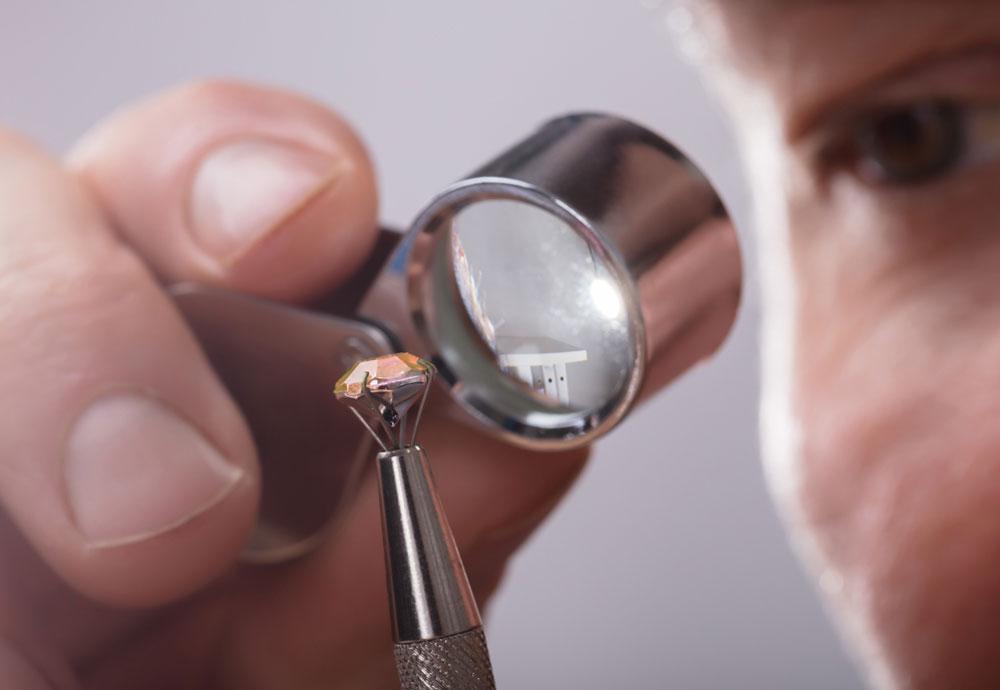
A 10× jeweller’s loupe is an excellent starting point.
Before grading clarity, make sure the gemstone is completely clean.
Dust, fingerprints and grease can look remarkably similar to inclusions.
Use an appropriate jewellery cleaning method and dry the stone carefully.
Before reaching for your loupe, examine the gemstone normally.
Hold it under good, neutral lighting and look at it face up.
Ask yourself:
This gives you an idea of whether the gemstone is eye clean.
Use a good quality 10× loupe.
Hold the gemstone securely with tweezers or an appropriate gem holder and examine it under strong, diffuse lighting.
Don’t simply look at the table.
Rotate the gemstone and inspect:
Different viewing angles can reveal inclusions that aren’t immediately obvious.
Once you find an inclusion, determine what you’re looking at.
Is it:
Try to determine whether the feature is inside the gemstone or on its surface.
A larger inclusion generally has a greater effect on clarity than a tiny inclusion.
However, size is only one factor.
A small dark inclusion in the centre of a pale gemstone may be more noticeable than several larger, transparent inclusions near the edge.
Position can make a major difference.
An inclusion directly beneath the table is usually easier to see than one hidden near the edge or underneath a pavilion facet.
This is why clarity cannot be judged simply by counting inclusions.
Look at how much contrast the inclusion has against the gemstone.
A dark inclusion can be much easier to see than a transparent inclusion of similar size.
GIA refers to this contrast as relief. The greater the difference in brightness, darkness or colour between the inclusion and gemstone, the more visible it is likely to be.
Surface reaching inclusions deserve particular attention.
A fracture or feather that reaches the surface may be more significant than an entirely internal inclusion because it can potentially affect durability.
This is particularly important when buying gemstones intended for rings or other jewellery exposed to knocks and everyday wear.
You can make a useful approximate clarity assessment yourself, but you should not present it as a laboratory certified grade.
A simple approach is:
If you cannot see any inclusions face up, the gemstone could be considered eye clean.
This does not automatically make it VVS or VS.
If you struggle to locate tiny inclusions even with a loupe, the stone may be toward the VVS end of the scale.
If inclusions are present but require some effort to locate, VS may be a reasonable informal description.
If inclusions are obvious under 10× but the stone still has good transparency and appearance, SI may be appropriate as an informal description.
If inclusions are readily visible to the naked eye, particularly face up, the stone may fall into the Included range.
However, this is only a guide.
Professional grading is more complicated and considers multiple factors rather than simply whether an inclusion can be seen.
This is one of the most important things to understand about gemstone clarity.
Different gemstones naturally have different levels and types of inclusions.
An aquamarine with obvious inclusions may be considered relatively low quality, while an emerald with similar inclusions may still be highly desirable.
Some gemstones are commonly expected to be relatively clean, while others are naturally more included.
The gemstone’s:
can all influence how its inclusions should be interpreted.
Inclusions can even be valuable diagnostic features. They can help gemmologists identify natural gemstones and, in some cases, can contribute to a gemstone’s desirability.
A high clarity grade does not automatically mean a gemstone is better.
A gemstone’s overall appeal depends on much more than clarity.
For example, a gemstone with exceptional colour and a beautiful cut may be considerably more attractive than a completely clean stone with poor colour and an unattractive cut.
When assessing a gemstone, consider:
Colour + Clarity + Cut + Transparency + Size + Origin + Treatment
Clarity is just one part of the overall picture.
You will often see the term eye clean used when buying coloured gemstones.
An eye clean gemstone is one where inclusions are not readily visible to the unaided eye under normal viewing conditions.
It is a useful description for buyers because most people view gemstones without magnification.
However, eye clean is not a formal universal clarity grade. GIA specifically notes that “eye clean” is an industry term rather than one of its formal diamond clarity grades.
For this reason, a gemstone described as eye clean should ideally also have clear photographs or video showing the stone from different angles.
Interestingly, sometimes inclusions are actually desirable.
Natural inclusions can help demonstrate that a gemstone is natural and can provide important information about its formation.
Certain inclusions are also characteristic of particular gemstones.
For example, inclusions can create:
In these cases, an inclusion isn’t necessarily a flaw — it can be part of what makes the gemstone special.
While examining a gemstone yourself can be enjoyable and useful, accurately assigning a professional clarity grade requires training and experience.
Professional graders use controlled lighting, magnification and established grading procedures. In the GIA diamond system, the final clarity assessment is based on examination at 10× magnification and considers several characteristics rather than simply the number of inclusions.
For valuable gemstones, particularly high value sapphires, rubies, emeralds and other important stones, an independent gemmological report can provide much greater confidence.
Understanding gemstone clarity grades can make buying and selling gemstones much easier.
From Flawless (FL) and Internally Flawless (IF) through VVS, VS, SI and Included (I), the grades provide a useful framework for describing the visibility and significance of inclusions.
However, coloured gemstones are different from diamonds, and there is no single universal clarity scale that applies identically to every gemstone.
When assessing your own gemstone, start with the naked eye, move to a 10× loupe, identify the inclusions, consider their size and position, and assess how much they affect the overall appearance and transparency.
Most importantly, remember that inclusions are not always defects. They are a natural part of many gemstones and can sometimes make a stone more interesting, distinctive and even more valuable.
For high value gemstones, however, professional identification and grading remain the best way to establish an independent assessment of quality.
Subscribe to get the latest posts sent to your email.
Opal is one of the most fascinating natural gemstones, famous for its incredible play of colour. Unlike many gemstones that
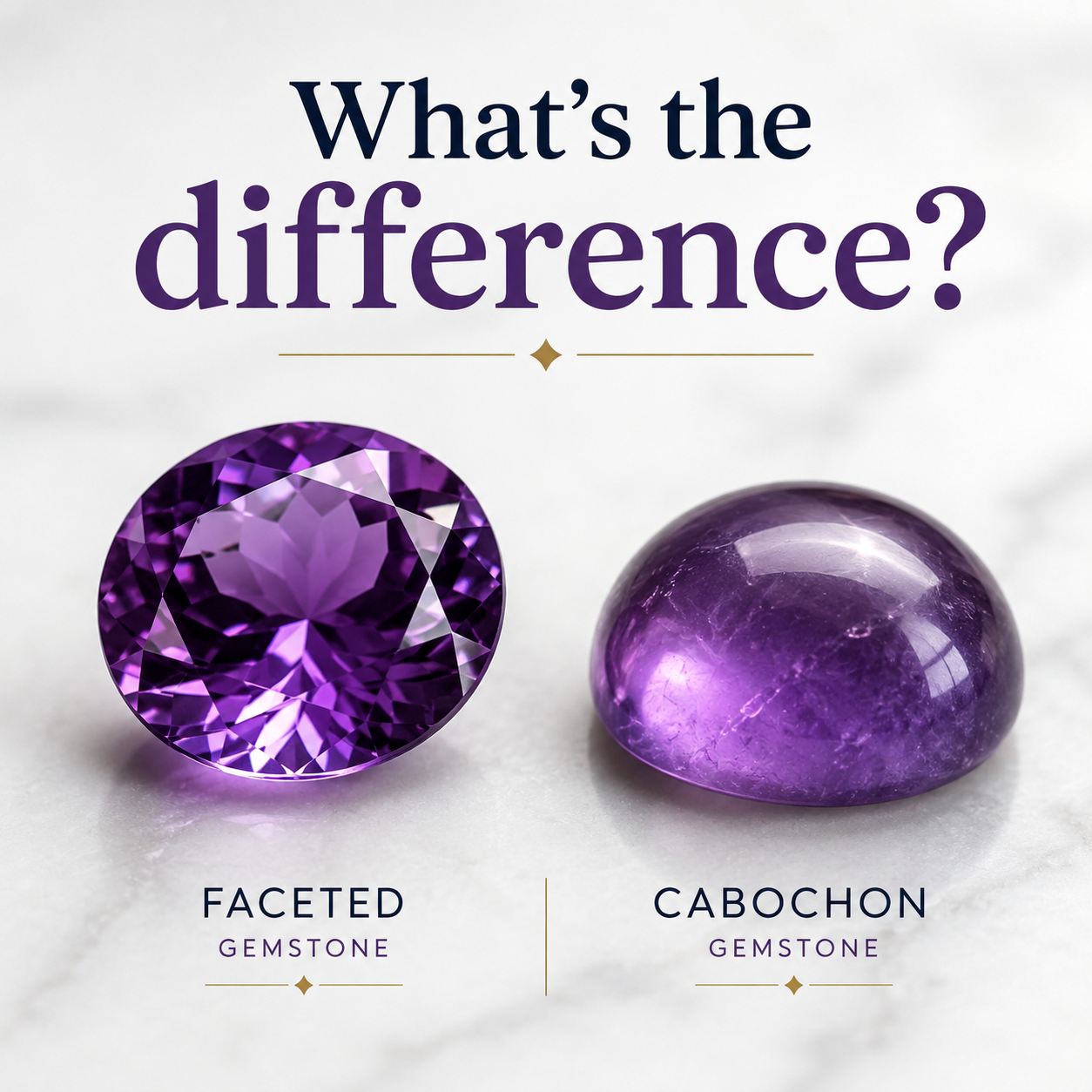
When shopping for natural gemstones, one of the first things you’ll notice is that gemstones are available in different cuts.