
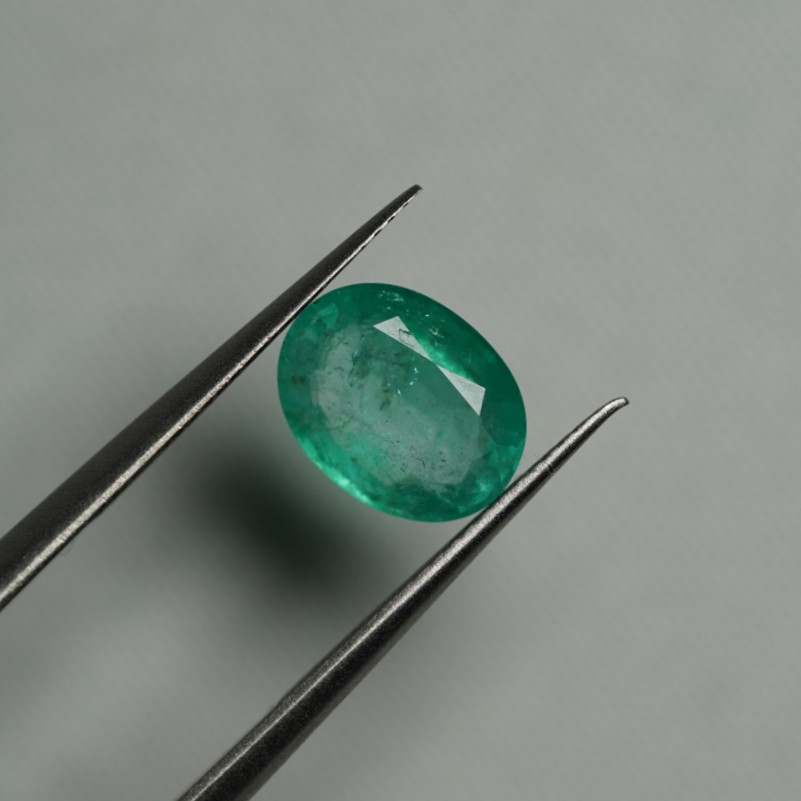
Emeralds Explained
Colour, Origin, Clarity, Transparency and Value Emeralds are among the world’s most admired and valuable coloured gemstones. Their distinctive green
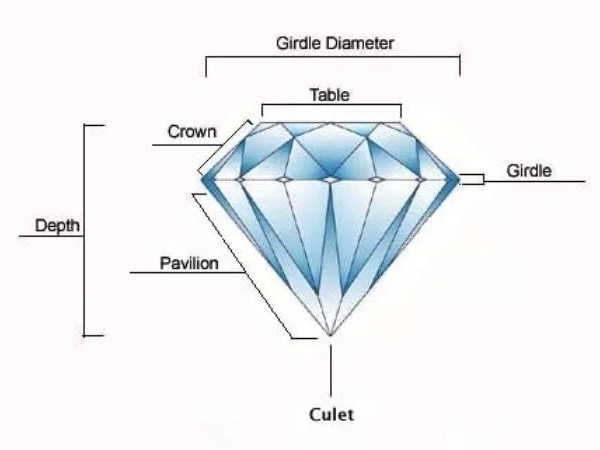
If you’ve ever looked closely at a faceted gemstone, you may have noticed that it is made up of several different sections. Terms such as table, crown, girdle, pavilion and culet are commonly used by gemologists, gemstone cutters and jewellers to describe these different parts.
Understanding the anatomy of a gemstone can help you better appreciate how a stone has been cut and how its proportions can affect its brilliance, sparkle, colour and overall appearance.
In this guide, we’ll explain the main parts of a faceted gemstone and what each one does.
A faceted gemstone has a series of flat, polished surfaces called facets. These facets are carefully positioned and angled to interact with light as it enters and leaves the gemstone.
Faceting is commonly used for transparent and translucent gemstones such as:
The exact number and arrangement of facets varies depending on the cut and shape of the gemstone.
Although different cuts can look very different, most traditional faceted gemstones can be described using several key areas: table, crown, girdle, pavilion and culet.
The table is the large, flat facet located at the top of a faceted gemstone.
It is usually the largest individual facet and is the first area most people notice when looking at a gemstone from above.
The table allows light to enter the gemstone and plays an important role in how light is reflected back towards the viewer.
The size of the table is an important part of the gemstone’s overall proportions.
A well proportioned table can contribute to:
The ideal table size varies depending on the gemstone species, shape and cutting style. There is no single table proportion that is perfect for every gemstone.
The crown is the upper section of the gemstone between the table and the girdle.
When looking at a gemstone from the side, the crown is the section that slopes outward from the table towards the widest part of the stone.
The crown is made up of multiple facets, including the table and surrounding facets.
The crown helps control how light enters, reflects and exits the gemstone.
Its height and angles can have a significant influence on:
A well designed crown works together with the pavilion below it to produce attractive light return.
The girdle is the widest part of a faceted gemstone.
It forms the boundary between the crown above and the pavilion below.
If you look at a gemstone from the side, the girdle is generally the area around its outer edge.
The girdle can be:
It can also be faceted, polished or left with a different finish depending on the cutting style.
The girdle provides an important structural boundary around the gemstone.
A girdle that is extremely thin can be more vulnerable to chips or damage, particularly around the edges.
An excessively thick girdle can add unnecessary weight without necessarily contributing to the visible size of the gemstone.
For jewellery makers, the girdle is particularly important because it is also the area that interacts with the setting.
The pavilion is the lower section of the gemstone, extending from the girdle down towards the bottom of the stone.
When viewed from the side, the pavilion slopes inward from the girdle towards the culet or bottom point.
The pavilion contains multiple facets and plays a particularly important role in controlling the movement of light through the gemstone.
The angles of the pavilion facets can strongly influence light return.
If the pavilion is cut at inappropriate angles, light may pass through the gemstone rather than being reflected back towards the viewer.
This can make a gemstone appear:
A well cut pavilion can help produce excellent brilliance and attractive sparkle.
The ideal pavilion proportions vary depending on the gemstone and cutting style.
The culet is located at the bottom of the gemstone.
In some cuts, the pavilion facets meet at a single point. This is sometimes described as a pointed culet or no visible culet facet.
Other gemstones have a small flat facet at the bottom, known as the culet.
The size and shape of the culet can affect the appearance of a gemstone.
A very large culet may be visible when looking through the table, particularly in a transparent gemstone.
A very small or pointed culet can provide a different visual appearance and is common in many modern cuts.
The culet also needs to be considered when assessing the overall proportions of a gemstone.
The table, crown, girdle, pavilion and culet should not be considered separately.
They work together as a complete system.
Light enters through the gemstone’s upper surfaces, travels through the stone, interacts with the pavilion facets and is reflected back towards the viewer.
This interaction is what creates much of the brilliance and sparkle associated with a well cut faceted gemstone.
A gemstone can have excellent colour and clarity but still appear less impressive if the proportions and facet arrangement are poorly executed.
Think of a faceted gemstone from top to bottom:
The large, flat facet at the top.
The upper section between the table and girdle.
The widest section around the outside of the gemstone.
The lower section between the girdle and culet.
The bottom point or small facet at the base of the gemstone.
In simple terms:
TABLE → CROWN → GIRDLE → PAVILION → CULET
Understanding these five terms gives you a useful foundation for discussing gemstone cuts and proportions.
Two gemstones can have exactly the same shape and dimensions but look very different because of the way they have been cut.
The proportions of the:
can all influence how light interacts with the gemstone.
This is particularly important with transparent gemstones where light can travel through the stone.
A skilled gemstone cutter aims to balance several factors, including light performance, colour, weight retention, symmetry and the natural characteristics of the rough gemstone.
No.
The term “culet” is often used to describe the bottom area of a gemstone, but not every faceted gemstone has a separate flat culet facet.
Some gemstones finish in a sharp point where the pavilion facets meet.
Others have a small polished facet at the bottom.
The exact design depends on the cut and the cutter’s choices.
The sections described above are made up of individual facets.
A facet is a flat, polished surface cut into a gemstone.
Different gemstone cuts use different arrangements and numbers of facets.
For example, you may encounter:
Each cutting style is designed to produce a particular shape and interaction with light.
Once you understand the different parts of a gemstone, you can start looking at your gemstones in a completely different way.
Instead of simply looking at the colour and shape, examine the stone from several angles.
Look at:
The Table: Is it symmetrical and well polished?
The Crown: Does it have even proportions?
The Girdle: Is it consistent around the gemstone? Are there any particularly thin areas or chips?
The Pavilion: Does the stone appear balanced when viewed from the side?
The Culet: Is there a visible culet facet or does the stone finish in a point?
You can also look at the gemstone’s symmetry, polish and overall proportions.
A 10× loupe can be particularly useful for examining these details.
One of the fascinating things about buying natural loose gemstones is that every piece of rough material presents the cutter with a different challenge.
Natural inclusions, colour zoning, fractures and the shape of the rough crystal can all influence how a gemstone is cut.
The cutter must often balance the desire to produce an attractive, well proportioned gemstone against the need to retain as much valuable material as possible.
This is one reason why two gemstones of the same species, colour and size can still have noticeably different appearances.
The anatomy of a faceted gemstone is much more than simply its shape.
The table, crown, girdle, pavilion and culet all form important parts of the gemstone and work together to influence its appearance and interaction with light.
Understanding these terms can help you make more informed decisions when buying gemstones and give you a greater appreciation of the skill involved in cutting them.
The next time you examine a faceted gemstone, take a closer look. What might initially appear to be a simple polished stone is actually a carefully designed arrangement of surfaces, angles and proportions all working together to reveal the natural beauty of the gemstone.
Looking for natural loose gemstones?
Explore the LC Gemstones collection of natural faceted gemstones, available in a wide variety of colours, shapes and sizes for jewellery making, collecting and gemstone enthusiasts.
Subscribe to get the latest posts sent to your email.
Colour, Origin, Clarity, Transparency and Value Emeralds are among the world’s most admired and valuable coloured gemstones. Their distinctive green
Gemstone Clarity Grades Explained | I, SI, VS, VVS, IF & FL When buying a natural gemstone, one of the