
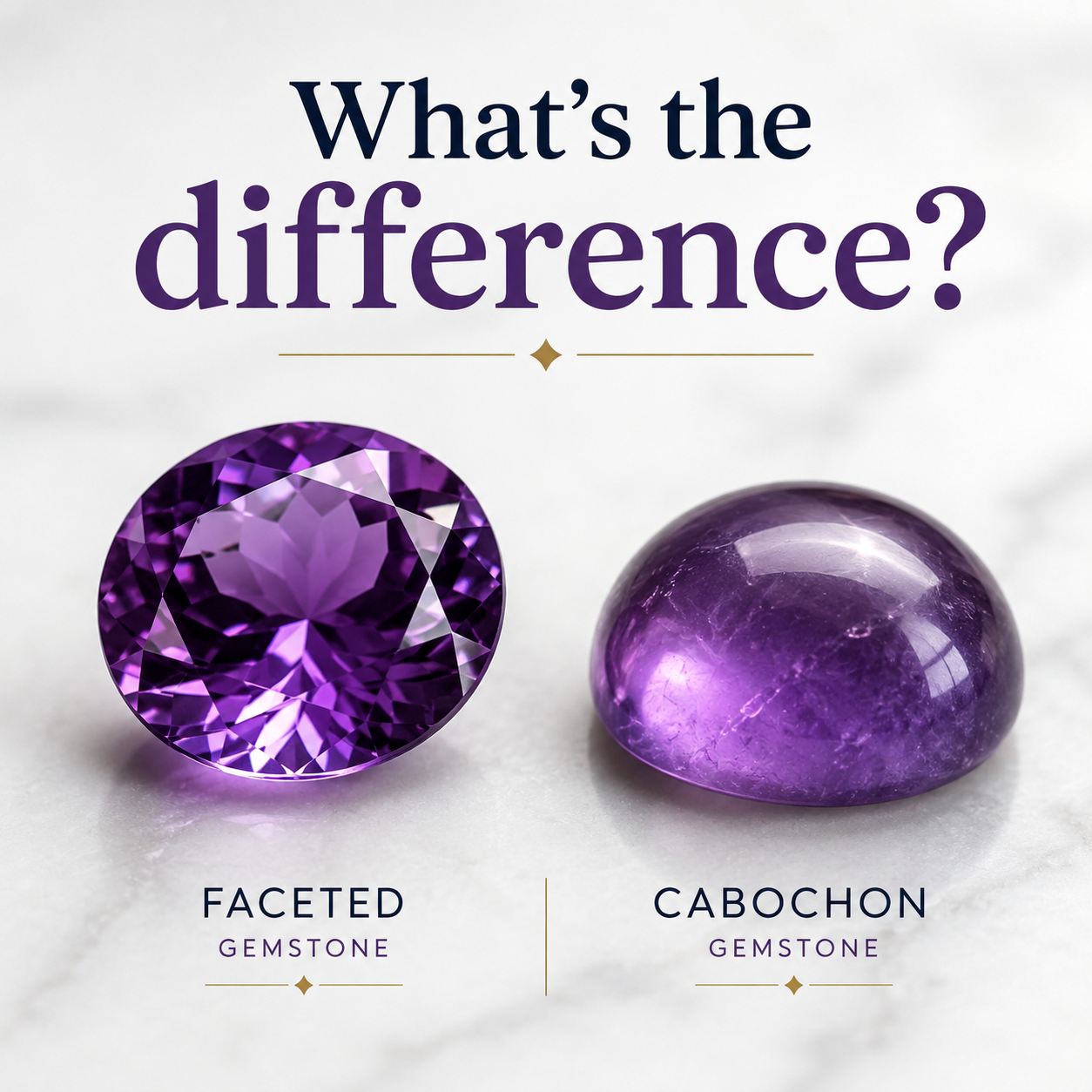
Faceted vs Cabochon Gemstones: What’s the Difference?
When shopping for natural gemstones, one of the first things you’ll notice is that gemstones are available in different cuts.
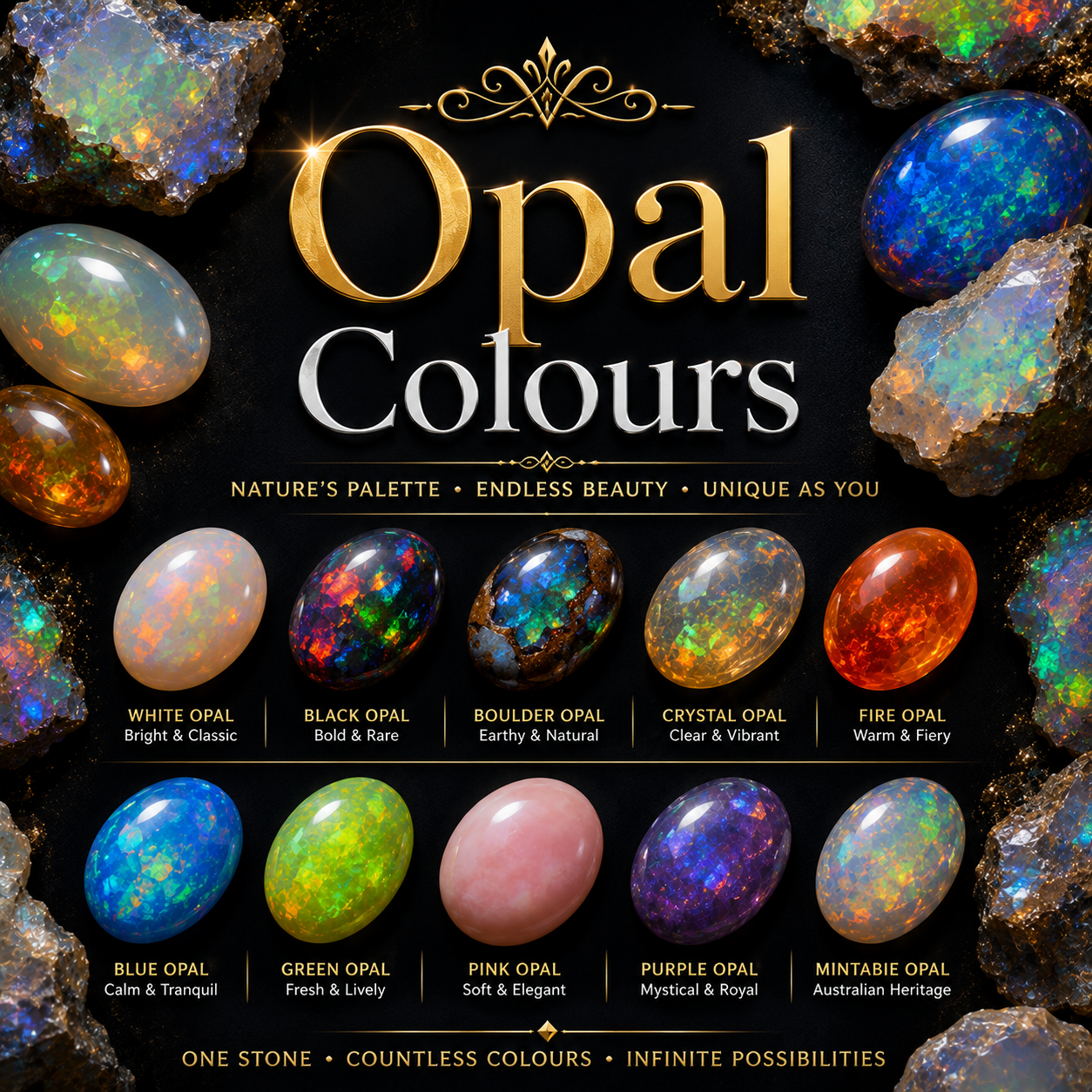
Opal is one of the most fascinating natural gemstones, famous for its incredible play of colour. Unlike many gemstones that have a relatively consistent colour, opals can display flashes of blue, green, yellow, orange, red and even violet as the stone moves in the light.
But are some opal colours rarer than others?
The answer is yes — although the rarity and value of an opal depend on much more than colour alone. The body tone, brightness, pattern, transparency, origin and quality of the play of colour all play an important role.
In this guide, we’ll explore the different colours found in natural opals and explain which are generally considered the rarest.
Opal’s famous colour display is known as play of colour. It occurs when microscopic silica spheres within the opal are arranged in a regular structure. When light interacts with these structures, it can separate into different colours, creating the flashes that make opal so distinctive.
The colours can range from relatively common blues and greens to much rarer reds and oranges.
It is important to remember that the colour of an opal’s body and its play of colour are two different things.
Body tone refers to the underlying colour of the opal. It can range from:
Opals can also have distinctive body colours, particularly fire opals, which are commonly associated with yellow, orange and red tones.
Play of colour is the changing display of spectral colours seen across the surface of an opal.
A single opal can display several colours at once, with the colours changing as the stone is moved under light.
Red is generally considered one of the rarest and most desirable colours in opal play of colour.
Red flashes require a particular arrangement and spacing of the microscopic silica spheres within the opal. Because these conditions occur less frequently, strong red play of colour can make an opal particularly desirable.
A high quality opal displaying vivid red flashes across a dark body tone can be exceptionally attractive and collectible.
However, red does not automatically mean an opal is valuable. The intensity, distribution and pattern of the colour, along with the stone’s overall quality, are also important.
Orange and yellow are also highly attractive colours found in opals.
Strong orange flashes can be particularly impressive when combined with a dark body tone. Yellow is generally more commonly encountered than strong red play of colour, although a bright and well distributed yellow display can still add considerable appeal.
Fire opals are especially well known for their orange and yellow body colours.
Green is one of the colours frequently seen in opal.
Green flashes can range from subtle and delicate to extremely bright. They can appear alongside blue, yellow and other colours, creating a multi coloured display.
Although green is generally more common than red, a high quality opal with intense green play of colour and an attractive pattern can still be highly desirable.
Blue is another common colour found in natural opals.
Blue flashes can range from pale blue through to vivid electric blue. In some opals, blue can dominate the entire play of colour, while in others it appears alongside green, yellow and red.
Blue is generally more frequently encountered than red, but a bright blue display can still make an opal particularly attractive.
Violet and purple colours can occur in opal but are generally less commonly seen as dominant colours.
These colours can be particularly striking when combined with blue, green or red flashes.
Because opal is capable of displaying several colours simultaneously, finding a stone with a strong combination of unusual colours can make it especially interesting to collectors.
When discussing opal rarity, black opal deserves special attention.
Black opal is not necessarily black because of the colour of its play of colour. Instead, it has a dark body tone that provides a strong contrast against the colours displayed on its surface.
This dark background can make bright red, orange, green and blue flashes appear particularly vivid.
Australian black opal, especially material from Lightning Ridge, is highly regarded by collectors and is often associated with some of the world’s finest opals.
A black opal with intense brightness and strong red play of colour can be exceptionally rare.
White opal has a light or white body tone and is one of the most familiar varieties of opal.
It can display an impressive range of colours, including blue, green, yellow, orange and red.
White opal is generally more widely available than high quality black opal, but this does not mean that all white opals are common or inexpensive.
A white opal with strong brightness, attractive patterning and vivid multi coloured play of colour can be highly desirable.
Crystal opal is characterised by its translucent or semi transparent body.
The transparent nature of the material can allow the play of colour to appear suspended within the gemstone, creating a distinctive appearance.
Crystal opals can have light or dark body tones and can display a wide range of colours.
High quality crystal opals with strong, bright play of colour can be particularly attractive to collectors and jewellery makers.
Boulder opal is another fascinating type of Australian opal. It forms naturally within ironstone, with the host rock remaining attached to the opal.
The contrast between the dark ironstone and colourful opal can create dramatic patterns and displays.
Boulder opal can show blue, green, yellow, orange and red play of colour, with particularly strong red and multi coloured examples being highly sought after.
Fire opal is best known for its body colour rather than traditional play of colour.
These gemstones commonly display warm colours such as:
Some fire opals can also display play of colour, although this isn’t present in every specimen.
Mexican fire opal is particularly well known and can range from transparent yellow material to vivid orange red gemstones.
There isn’t one simple answer because rarity depends on the type and quality of the opal.
As a general guide, strong red play of colour is considered one of the rarest and most desirable colours, particularly when it appears with high brightness and against a dark body tone.
A simplified comparison is:
| Colour | General Availability | Potential Desirability |
|---|---|---|
| Blue | More commonly encountered | High |
| Green | More commonly encountered | High |
| Yellow | Moderately common | High |
| Orange | Less common | Very High |
| Red | Relatively rare | Exceptional |
| Violet/Purple | Less commonly seen | Very High |
| Multi colour | Depends on quality | Very High |
However, this table should only be used as a general guide. An exceptional blue opal can be considerably more desirable than a poor quality red opal.
Colour is only one part of what makes an opal desirable.
The brightness of the play of colour is extremely important. A gemstone displaying a vivid, intense flash can be much more impressive than one showing the same colours very weakly.
Pattern can also make a major difference.
Some attractive patterns include:
A rare combination of strong colour, excellent brightness and an attractive pattern can make an opal particularly collectible.
Not necessarily.
An opal displaying many colours can be spectacular, but a stone displaying predominantly one colour can also be extremely desirable.
For example, an opal with exceptionally bright red play of colour may be more sought after than a stone displaying several weaker colours.
The most important factors include:
Colour + Brightness + Pattern + Body Tone + Quality + Origin
These factors work together to determine the overall appeal and desirability of an opal.
When buying a natural opal, don’t focus solely on the colour you see in photographs.
Look at the overall gemstone and consider:
For collectors and jewellery makers, choosing an opal is often about finding a combination of characteristics that makes the individual gemstone unique.
Every natural opal is different, which is part of what makes these gemstones so fascinating. From vibrant flashes of red and orange to beautiful blue and green displays, no two opals will ever look exactly the same.
At LC Gemstones, we offer a selection of natural loose gemstones for collectors, jewellery makers and gemstone enthusiasts throughout the UK.
Whether you’re searching for an eye catching opal for a jewellery project or adding a unique gemstone to your collection, explore our range of natural opals and premium loose gemstones to find something special.
Opal is one of nature’s most colourful gemstones, and its rarity cannot be judged by colour alone.
While strong red play of colour is generally among the rarest, the most desirable opals combine exceptional colour with brightness, attractive patterns, quality and an appealing body tone.
That’s what makes buying an opal so exciting — you’re not simply choosing a colour. You’re choosing a gemstone with its own unique combination of natural characteristics.
Subscribe to get the latest posts sent to your email.
When shopping for natural gemstones, one of the first things you’ll notice is that gemstones are available in different cuts.

Are you looking for a simple and effective way to sell your natural gemstones? At LC Gemstones, we offer a
Get notified about new articles